
Pros and Cons of Smart Privacy Glass: A Complete Guide
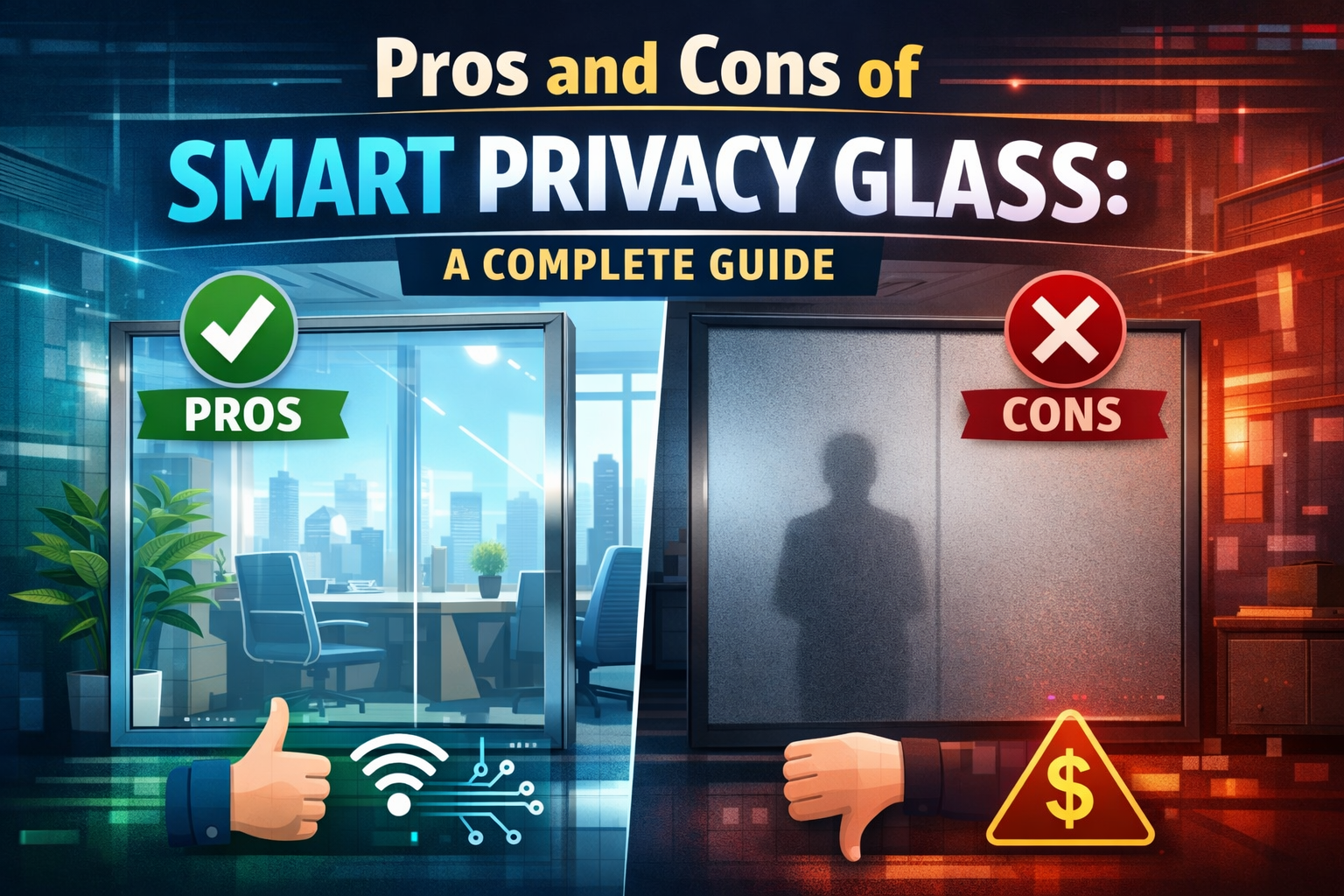
Smart privacy glass has quickly moved from a futuristic concept to a practical solution used in homes, offices, hotels, and healthcare spaces. As open layouts and glass-heavy architecture become more common, the need for on-demand privacy without blocking natural light has never been greater.
Smart privacy glass promises exactly that, but like any technology, it comes with both advantages and limitations. This guide takes an honest, balanced, and practical look at the pros and cons of smart privacy glass, helping you decide whether it’s the right solution for your space.
At Halo Smart Glass, we believe informed decisions lead to better long-term results. Let’s break it down clearly.
What Is Smart Privacy Glass?
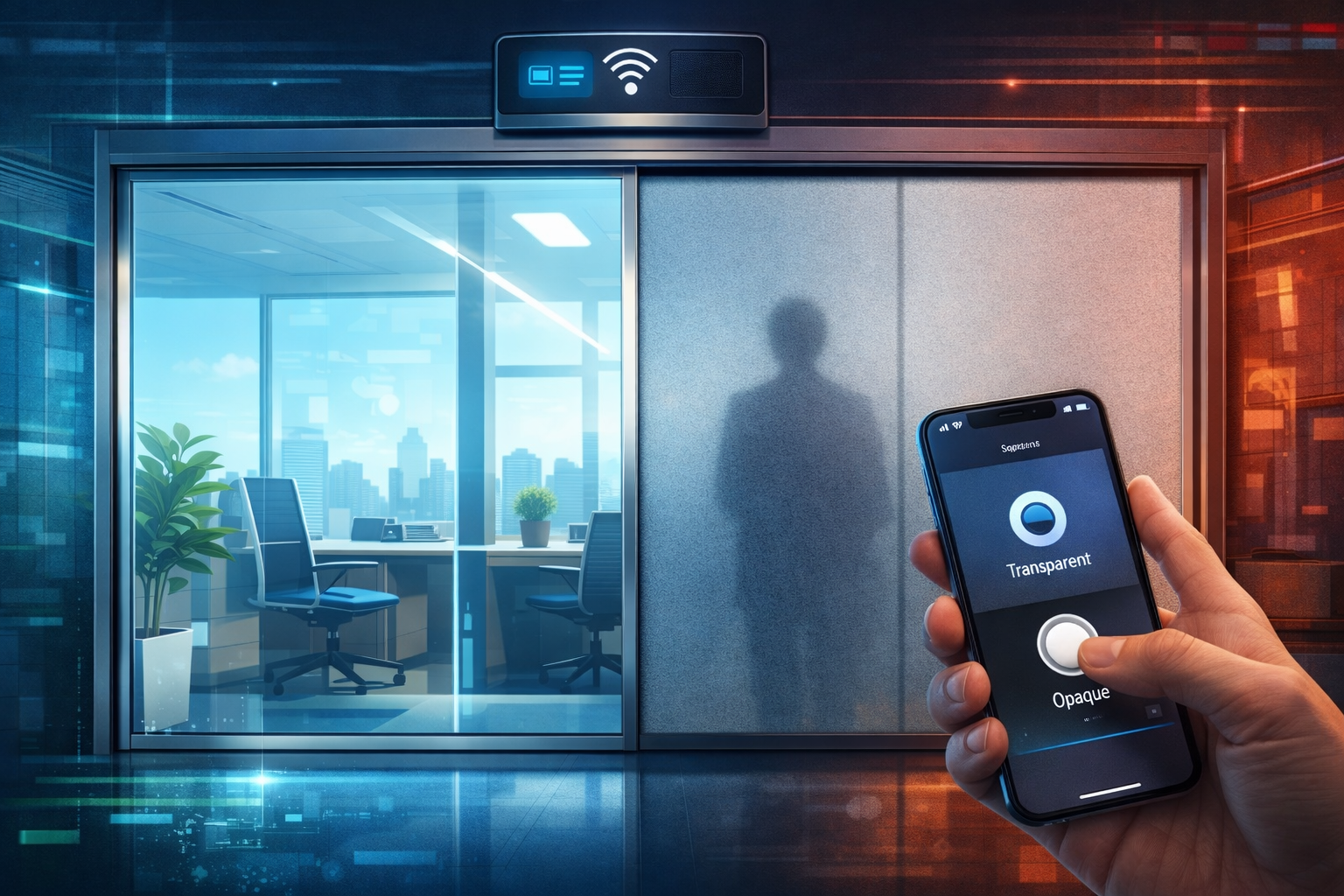
Smart privacy glass (also known as switchable smart glass) is a type of glass that changes from clear to opaque when electricity is applied. This transformation happens instantly and can be controlled via a wall switch, remote, or smart home system.
The most commonly used technology is PDLC (Polymer Dispersed Liquid Crystal). When powered on, liquid crystals align to allow light to pass through. When powered off, they scatter light, creating a frosted appearance.
This makes smart privacy glass ideal for spaces where visibility and privacy need to change throughout the day.
Pros of Smart Glass and Smart Film
1. Instant Privacy at the Touch of a Button
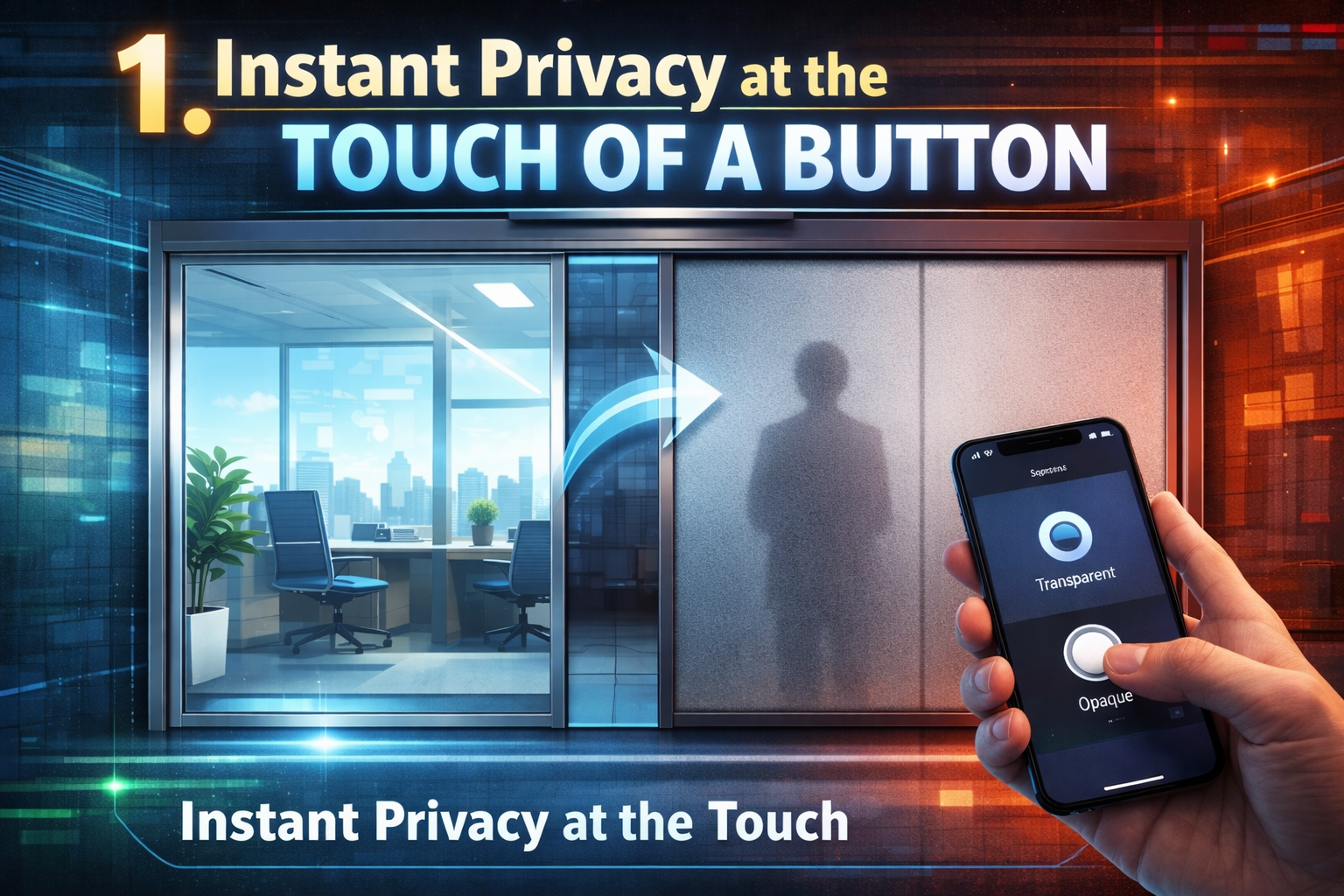
Smart glass and smart film allow spaces to switch from open to private instantly. This is especially valuable in environments where confidentiality, comfort, or discretion is required, such as meeting rooms, clinics, and bathrooms.
Sales advantage: One solution replaces blinds, curtains, and frosted glass.
2. Premium, Minimal Design
Unlike traditional privacy solutions, smart glass integrates seamlessly into modern interiors. There are no visible coverings, cords, or fixtures—just clean glass that adapts to your needs.
Design benefit: Preferred by architects and interior designers for high-end projects.
3. Natural Light Without Compromise
Even in its frosted state, smart privacy glass allows diffused daylight to pass through. This maintains brightness while eliminating direct visibility.
Technical benefit: Improves visual comfort and reduces dependence on artificial lighting.
4. Low Maintenance & High Durability
Smart glass has no moving parts. Regular glass cleaning is all that’s required, making it ideal for high-traffic commercial environments.
Operational benefit: Lower long-term maintenance costs.
5. Energy & Comfort Efficiency
Smart privacy glass helps:
Block UV rays
Reduce glare
Improve indoor thermal comfort
When integrated properly, it can support energy-efficient building strategies.
6. Multi-Functional Use
In commercial spaces, smart glass can double as:
Rear projection screens
Whiteboards
Presentation surfaces
Business benefit: Adds functionality without additional hardware.
Cons of Smart Glass and Smart Film
1. Higher Initial Investment
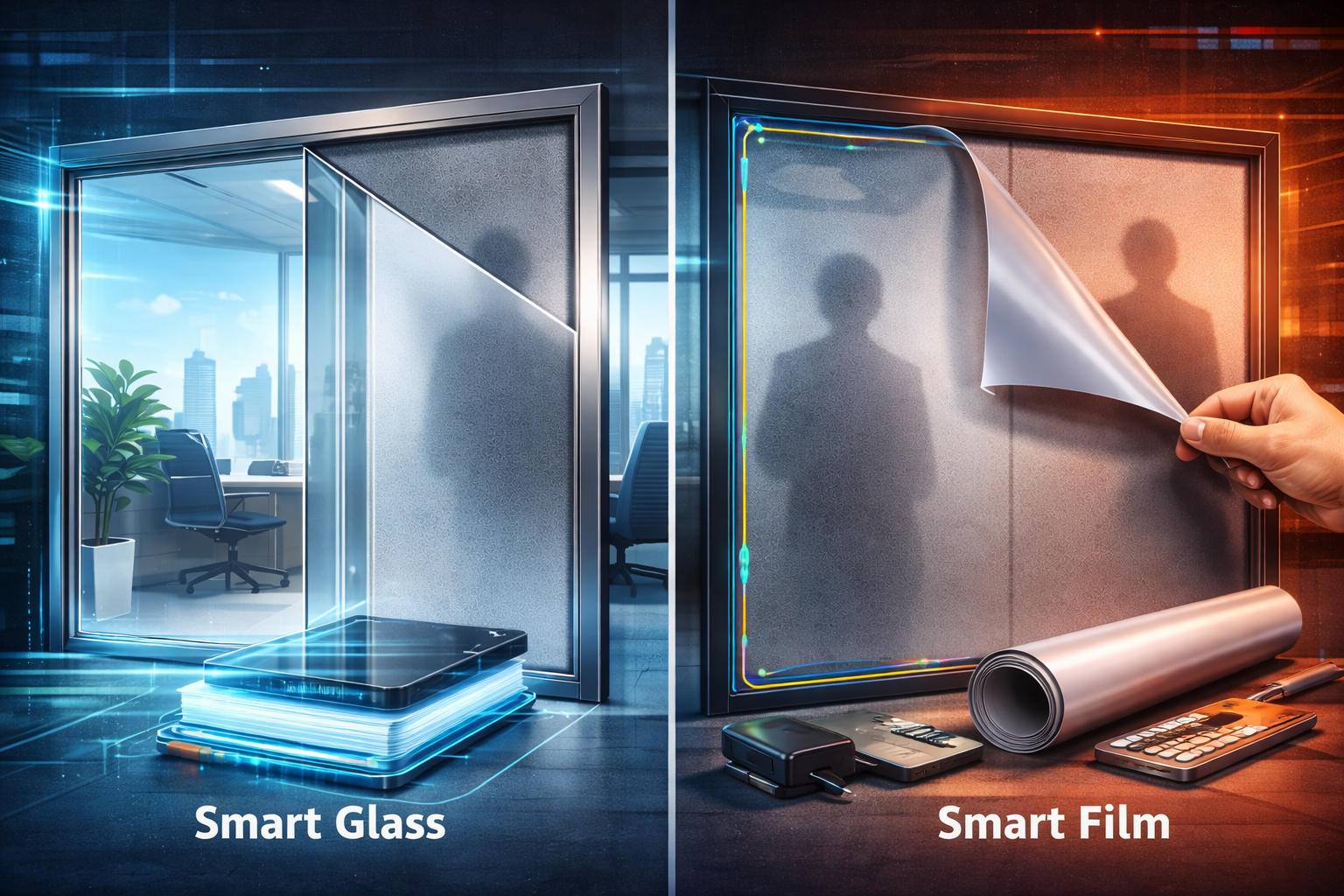
Smart glass costs more than standard glass, and while smart film is more affordable, both require a higher upfront budget compared to curtains or frosted films.
Sales perspective: Long-term value often outweighs initial cost for premium spaces.
2. Professional Installation Required
Smart glass installation involves electrical connections and glazing expertise. Poor installation can affect performance and longevity.
Important note: Always work with experienced providers like Halo Smart Glass.
3. Smart Film Is Limited to Interior Use
Smart film is best suited for indoor applications. Exterior-facing windows typically require integrated smart glass units for durability and protection.
4. Requires Electricity to Operate
Smart glass consumes a small amount of power to remain transparent. While consumption is minimal, it’s still a factor to consider.
Technical clarity: Power usage is significantly lower than most smart building systems.
5. Not Yet a Standard Product Everywhere
Smart glass is still a specialized solution, which means sourcing quality products and skilled installers is critical.
Smart Privacy Glass vs Blinds & Curtains
| Feature | Smart Privacy Glass | Blinds & Curtains |
|---|---|---|
| Privacy Control | Instant, switchable | Manual |
| Light Usage | Preserves daylight | Often blocks light |
| Design Impact | Clean & minimal | Visual clutter |
| Maintenance | Very low | Regular cleaning |
| Durability | Long-lasting | Wears over time |
Smart privacy glass offers a modern, long-term alternative to traditional window coverings especially in design-focused spaces.
Cost & ROI: Is Smart Privacy Glass Worth It?
While the initial investment is higher, smart privacy glass often delivers strong long-term value:
No recurring replacement of blinds or curtains
Increased property appeal and resale value
Enhanced energy efficiency through better light control
Improved functionality of spaces
For homeowners and businesses planning to stay long-term, smart glass often proves to be a cost-effective upgrade.
Smart Privacy Glass for Real-World Applications
Smart glass is no longer limited to luxury showcase projects. At Halo Smart Glass, we see growing demand across a variety of spaces, including homes, villas, offices, apartments, hospitals, clinics, hotels, and spas.
We provides Switchable Smart Film in Dubai, Halo Smart Film & Glass Riyadh, Texas, New York City, Washington DC, Miami, and Utah, serving residential, commercial, and architectural projects with expert installation and support.
When Smart Privacy Glass Makes the Most Sense
Smart privacy glass is best suited when:
Design aesthetics matter
Spaces serve multiple purposes
Natural light is a priority
Long-term usability is valued
It may not be ideal if:
Budget is extremely limited
Temporary privacy solutions are sufficient
FAQs About Smart Privacy Glass
1.Is smart privacy glass worth it for homes?
Yes. It offers privacy, light control, and modern aesthetics while increasing long-term value.
2. Can smart privacy glass be retrofitted?
Yes. Smart film solutions can be applied to existing glass, making them ideal for renovations.
3. How long does smart privacy glass last?
High-quality systems typically last 10–20 years with minimal maintenance.
4. Does smart glass consume a lot of electricity?
No. Power consumption is low and only required to change or maintain transparency.
5. Can smart glass be integrated with smart home systems?
Yes. Most modern smart glass solutions, including those from Halo Smart Glass, can integrate with home automation systems.
6. Do you provide smart glass in other locations?
Yes. Halo Smart Glass offers Switchable Smart Film and Glass in Riyadh, Dubai, Texas, New York City, Washington DC, Miami, and Utah, supporting both residential and commercial projects with high-quality installation.
Final Thoughts: A Balanced Choice for Modern Living
Smart privacy glass isn’t just a design trend—it’s a functional upgrade for modern spaces. While it comes with a higher upfront cost, the benefits in privacy, aesthetics, flexibility, and long-term value often outweigh the limitations.
For those seeking a future-ready solution that blends technology with everyday comfort, smart privacy glass offers a compelling balance.
At Halo Smart Glass, we focus on delivering solutions that fit real lifestyles not just showrooms. By choosing the right application, installation, and quality from the start, your space becomes modern, functional, and truly adaptable, no matter where you are in Riyadh, Dubai, Texas, New York City, Washington DC, Miami, or Utah.
